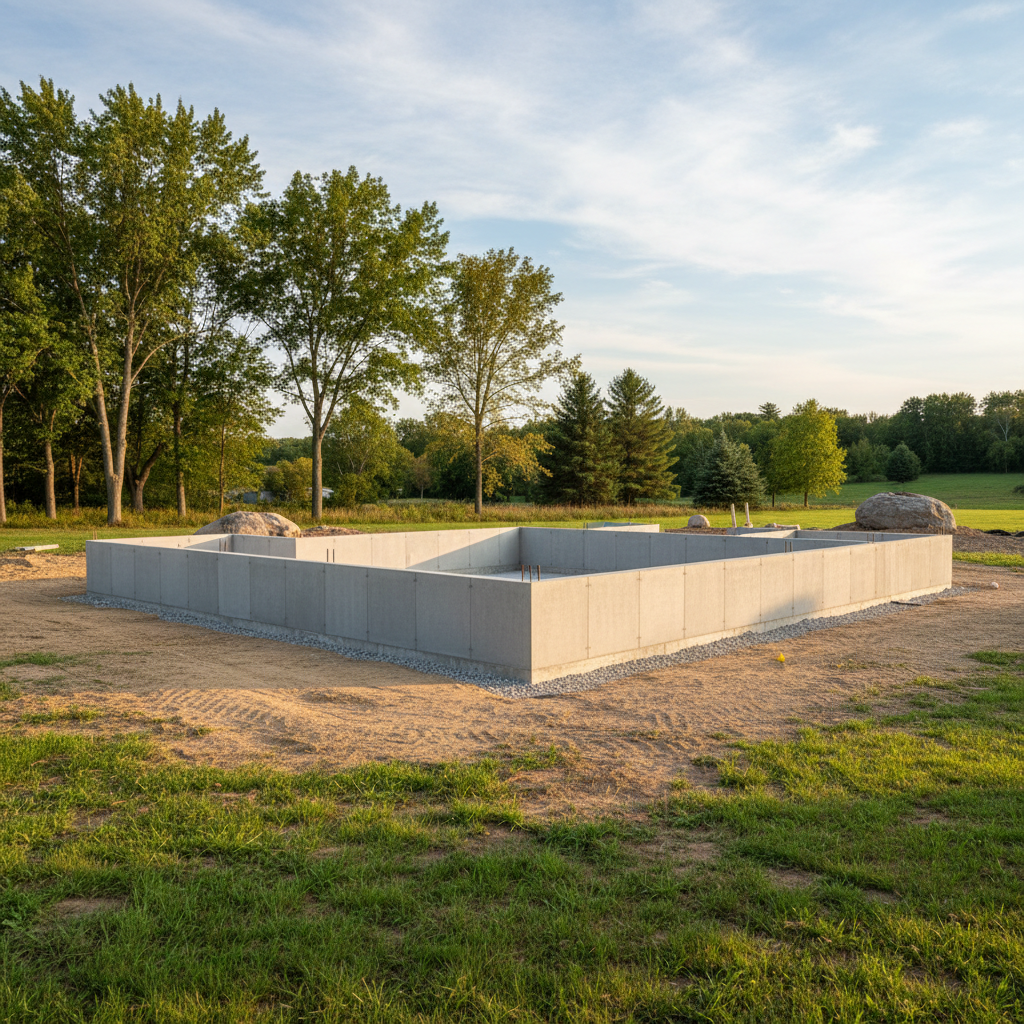
Building a new home or maybe adding an extension? You're probably already thinking about that concrete foundation. It’s the backbone of your whole structure, after all. But I've seen folks around Menomonie make some pretty common blunders. These mistakes end up costing them big time, both in money and stress. Let's talk about how to dodge those bullets, shall we?
Skimping on Site Prep: A Recipe for Disaster
This is probably the biggest mistake I see. People often think, "It's just dirt; how hard can it be?" Well, it's not *just* dirt. What that dirt does under your concrete? That's what really matters. I'm talking about proper excavation, compaction, and good drainage. You wouldn't believe how many times I've seen foundations poured on poorly compacted fill, or in spots with obvious water issues. Here in Menomonie, especially with some of the clay soils we have near the Red Cedar River, you just can't dig a hole and pour. If your contractor isn't talking about soil reports, proper grading, and maybe even a gravel base, that's a huge red flag. You need a solid, stable base. Otherwise, you're looking at cracks, settling, and bigger problems down the road.
Ignoring Drainage: Water Always Wins
Right after site prep, drainage is crucial. Water is the enemy of any foundation. If it isn't directed away from your home, it will find a way under or around your foundation. That causes hydrostatic pressure, which can push on your walls, eventually leading to cracks and leaks. I always tell people to think about how water will flow *before* the concrete goes in. This means proper grading away from the foundation, and maybe even a perimeter drain system. Don't just assume the builder or concrete guy has it all covered; ask specific questions about how they're planning to manage water around your new foundation. It's a small investment upfront that saves you a fortune in waterproofing and repair later, believe me.
Choosing the Cheapest Bid: You Get What You Pay For
Look, I get it. Everyone wants to save a buck. But when it comes to your foundation, going with the absolute lowest bid is often a false economy. A cheap quote usually means corners are being cut. Maybe they're using lower quality concrete mix, or skipping rebar, or rushing the pour and cure. A good contractor, like us at Genesis Concrete Co, will give you a detailed quote that explains *what* you're paying for. They'll talk about concrete strength, rebar placement, vapor barriers, and proper curing. If a bid seems too good to be true, it probably is. Ask for references, check their insurance, and don't be afraid to ask tough questions about their process and materials.
Not Understanding the Curing Process
Once the concrete is poured, the job isn't over. The curing process is critical for concrete strength and durability. It's not just about letting it dry; it's about controlling the moisture content as it hardens. If concrete dries too quickly, it can weaken and crack. A good contractor will explain how they plan to cure the concrete – whether that's with water, curing compounds, or covers. If they just pour it and walk away, that's a problem. Proper curing can take days, sometimes weeks, depending on the weather and the mix. Don't let anyone tell you it's good to go the next day, especially not for a foundation.
Forgetting About Future Access and Utilities
This one's less about structural integrity and more about future headaches. Are you planning on adding a bathroom in the basement? Running new electrical lines? Thinking about a radon mitigation system? Make sure your foundation plans account for these things. It's a lot easier and cheaper to sleeve for future plumbing or electrical conduits *before* the concrete is poured than to jackhammer it out later. Talk with your contractor and your plumber/electrician about any future plans you have for the space. A little foresight here saves a lot of demolition and patching later on.
Your foundation is literally what everything else rests on. Taking a little extra time to understand the process, ask the right questions, and choose a reputable contractor will pay dividends for decades. Don't just hope for the best; plan for it.